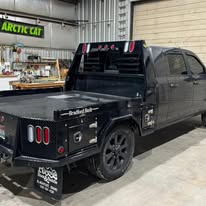
Choosing a flatbed truck bed might seem straightforward — but get it wrong and you'll be dealing with payload problems, legal headaches, or a bed that just doesn't fit your workflow. At American Truck Beds in Wichita, KS, we've helped hundreds of customers find the right setup. Here's what actually matters.
Step 1: Know Your Truck's GVWR
Your Gross Vehicle Weight Rating (GVWR) is the single most important number when selecting a flatbed. It determines how much weight your truck can legally and safely carry — including the bed itself. A steel flatbed can weigh anywhere from 600 to 1,400+ lbs depending on size and gauge, so that weight eats directly into your payload.
As a rule of thumb: if you're working close to your GVWR on a regular basis, consider an aluminum flatbed to shed 200–400 lbs without sacrificing strength.
Step 2: Match Bed Length to Your Cab Configuration
A flatbed has to clear your cab corners on turns and meet DOT overhang rules at the rear. Standard configurations we build at American Truck Beds include:
- 7'6" beds for regular cab short-wheelbase trucks
- 8'6" beds — the most common working flatbed size
- 9' and 11' beds for crew cabs and longer wheelbases
- Custom lengths for specific applications — just ask us
Step 3: Decide on Steel or Aluminum
This is the big debate in the flatbed world. Steel costs less upfront and handles abuse well. Aluminum weighs significantly less and won't rust — critical in states where road salt is used. In Kansas, where we don't salt heavily, steel is a perfectly solid choice for most applications. See our full Steel vs Aluminum guide for a detailed comparison.
Step 4: Choose the Right Floor Style
Flatbed decking comes in several materials, each with different grip, weight, and durability characteristics:
- Steel treadplate: Heavy, durable, excellent for heavy equipment hauling
- Aluminum treadplate: Lighter, corrosion-resistant, great for general hauling
- Wood plank over steel frame: Classic look, easy to replace, good grip
- Toolbox integration: We can build side boxes directly into the frame
Step 5: Plan Your Tie-Down Points
A flatbed without proper tie-down rings is just a flat surface. We weld in D-ring recessed pockets, stake pocket holes, and headache rack mounts based on what you haul. Tell us your typical loads and we'll position tie-downs accordingly. It's a small conversation upfront that saves a lot of frustration down the road.
Ready to Get Started?
Browse our latest builds and inventory on our Facebook page or reach out directly. We serve Wichita and all surrounding areas in Kansas and neighboring states. No pressure, just straight answers from people who build this stuff every day.
VIEW OUR BUILDS ON FACEBOOK