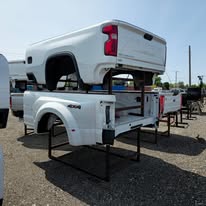
It's the most common question we get at American Truck Beds: "Should I go steel or aluminum?" The honest answer is — it depends. Both materials build excellent truck beds when properly fabricated. The right choice comes down to your specific use, your truck's capacity, and your long-term budget. Let's break it down.
The Quick Comparison
| Factor | Steel | Aluminum |
|---|---|---|
| Upfront Cost | Lower ($) | Higher ($$) |
| Weight | Heavier (600–1,400 lbs) | Lighter (400–900 lbs) |
| Rust Resistance | Requires maintenance | Naturally rust-proof |
| Dent/Scratch Repair | Easier to weld & repair | Requires aluminum welding |
| Payload Advantage | Standard | 200–500 lbs more payload |
| Longevity | 20+ years with care | 25+ years typical |
| Resale Value | Good | Higher (lighter trucks sell) |
The Case for Steel
Steel has built America's working trucks for a century — and for good reason. It's affordable, weldable by any shop, and handles punishment well. If you're dropping heavy equipment, dragging chains, or working in environments where bed damage is a constant, steel's ability to be repaired cheaply and easily is a genuine advantage.
- Lower initial purchase price — often $500–$1,000 less than aluminum
- Easier to repair at most welding shops (aluminum welding is a specialty skill)
- Better suited for very heavy, abrasive loads
- Available in heavier gauges for extreme duty applications
The Case for Aluminum
Aluminum beds have gone mainstream for one simple reason: they unlock payload. On a truck with a 2,000 lb payload rating, switching from a 900 lb steel bed to a 550 lb aluminum bed gives you 350 more pounds of legal hauling capacity. Over a lifetime of work, that's significant — and aluminum never rusts, which matters if you're parking it outside year-round.
- 200–500 lbs lighter than equivalent steel beds
- Zero rust — no painting, no undercoating required
- Maintains finish and appearance significantly longer
- Higher long-term resale value on both the bed and the truck
What About the Kansas Climate?
Kansas is a dry, moderate state — not a heavy road-salt environment like the northern Midwest. That works in steel's favor. Without heavy salt exposure, a properly maintained steel bed will last just as long here as aluminum in many cases. That said, if your truck lives outdoors year-round or you're in any flood-prone low areas, aluminum's rust immunity still wins long-term.
Our Recommendation
If budget is tight, go steel and get a quality bed with proper primer and paint. If you're working near your payload limit regularly, or you want the lowest-maintenance option over 20+ years, go aluminum. Either way — come talk to us. We build both, and we'll give you a straight recommendation based on your actual situation.
SEE OUR BUILDS ON FACEBOOK